


Origin of Ice Crack Craftsmanship: From Porcelain to Glass
Quick FAQ Guide
- Q: What is the origin of ice crack craftsmanship?
A: It originated in Song Dynasty China (960–1279 CE) as an accidental glaze effect on porcelain, later reinterpreted as a deliberate artistic technique. - Q: How is modern crackle glass made?
A: Through methods like thermal shock (dipping hot glass into cold water) or using textured molds to create a network of fine, sealed surface cracks. - Q: What does the ice crack pattern symbolize?
A: It embodies philosophical concepts of resilience and beauty in imperfection, often described as “cracked yet unbroken.” - Q: Where is this technique used today?
A: In luxury crystal goblets, vases, architectural glass, lighting fixtures, and decorative objects that celebrate textured artistry.
The origin of ice crack craftsmanship can be traced through centuries of artistic exploration, granting glass and porcelain objects their characteristic network of delicate fissures. At first sight, these patterns mimic fractures, yet the items remain intact and functional. This contradiction—crazed on the surface but robust at its core—is what renders the style so distinctive.
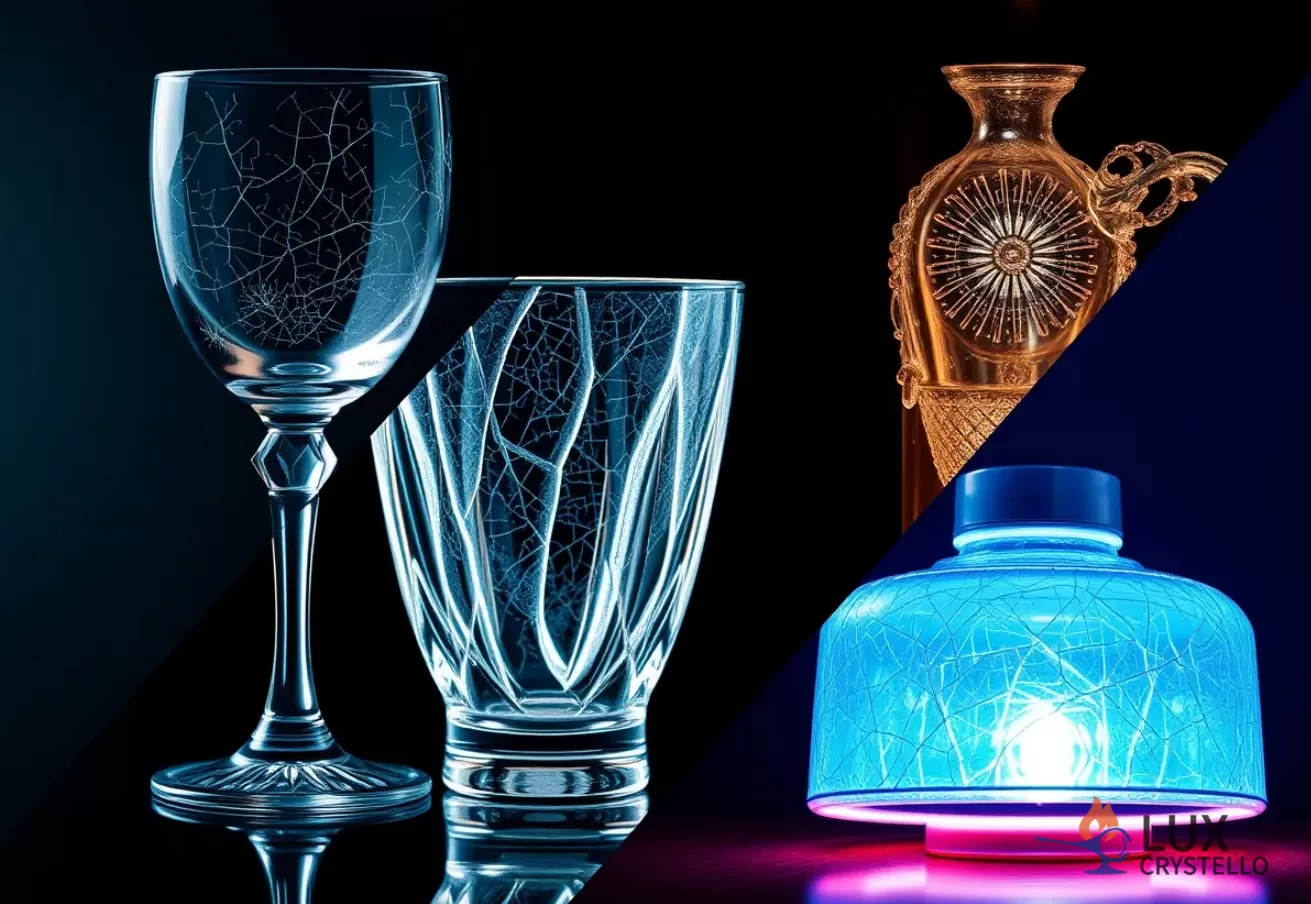
Today, ice crack glaze textures appear in numerous applications: crystal goblets, vases, architectural glass bricks, and contemporary lighting. Each piece carries unique lines that never duplicate, like a fingerprint solidified within the material. This inherent unpredictability often prompts inquiry: How are these cracks formed? Were they accidental, or the product of intentional artistry?
To address these questions, we must examine the origin of ice crack craftsmanship—following its evolution from the kilns of ancient porcelain makers to the furnaces of modern glass artisans.
The Ceramic Beginnings: Song Dynasty Innovation
The earliest documented origin of ice crack craftsmanship resides in Song Dynasty China (960–1279 CE), when imperial kilns such as those producing Ru ware and Guan ware created ceramics with apparent surface fractures. These fissures were not structural failures but fine cracks within the glaze layer, resulting from differing thermal expansion rates between the glaze and the clay body. As the vessels cooled, internal tension generated a web of intricate lines, later esteemed as ice crack glaze.
What commenced as a technical flaw rapidly transformed into a signature of aesthetic refinement. Rather than rejecting these pieces, scholars and nobility celebrated the effect, interpreting the frozen crack networks as “ice flowers” encapsulated within the vessel. This marks the foundational moment in crackle glass history, even though the initial medium was porcelain.
Cultural and Philosophical Significance
Within Chinese literati culture, these patterns symbolized the concept of “裂而不破” (cracked yet unbroken). They resonated with philosophical ideals of resilience, transience, and the beauty inherent in natural flaws. Collectors cherished bowls and vases with exceptionally fine, dense crack networks, referring to them as “金丝” (golden threads) or “碎冰” (crazed ice).
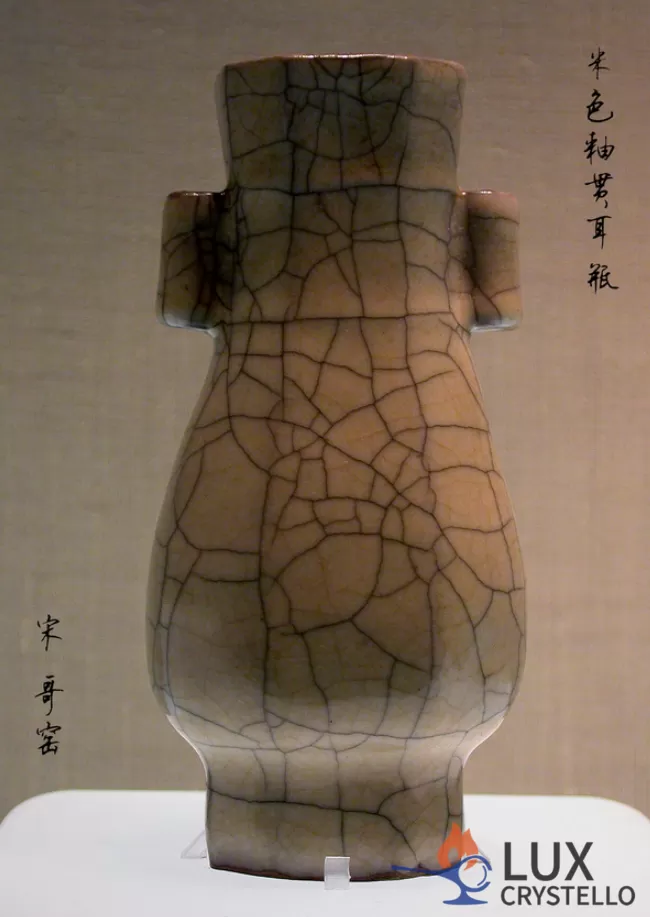
Thus, the origin of ice crack craftsmanship was initially less about deliberate design and more about recontextualizing natural accidents as expressions of elegance. This reinterpretation established the groundwork for its migration beyond ceramics, enabling the eventual development of the crackle glass technique.
The Transition to Glass: Technical Adaptation
From Porcelain to Crystal
By the 19th century, artisans from Europe to Asia turned their focus to glass, seeking methods to replicate the familiar crackle patterns of porcelain. Inspired by ice crack glaze, craftsmen experimented with techniques to embed fine fracture lines within molten glass without sacrificing durability.
Unlike porcelain, where glaze and clay interact chemically, glass demanded a different approach. The pivotal innovation involved thermal shock: immersing hot, partially formed glass objects into cold water and then reheating them. This sudden contraction created a network of internal cracks that became sealed beneath a glossy surface upon reheating and smoothing. This breakthrough became a landmark in crackle glass history.
Evolving Methodologies
Several techniques evolved to emulate the aesthetic of crackle glaze:
- Thermal Shock Method: Hot-blown glass is briefly immersed in cold water, causing surface cracking. The piece is reheated to seal the cracks without structural collapse.
- Molded Crack Patterns: Artisans developed molds engraved with fissure-like lines. Pressed molten glass adopts these textures, ensuring consistency for larger production runs.
- Surface Treatments: Methods like chemical etching and sandblasting provided alternative ways to reproduce the delicate appearance of ice crack glaze, especially useful for architectural panels and decorative lighting.
Through these adaptations, the essence of crackle glaze found a new expression—transforming into what we now recognize as the crackle glass technique.
Modern Revival and Cross-Cultural Dialogue
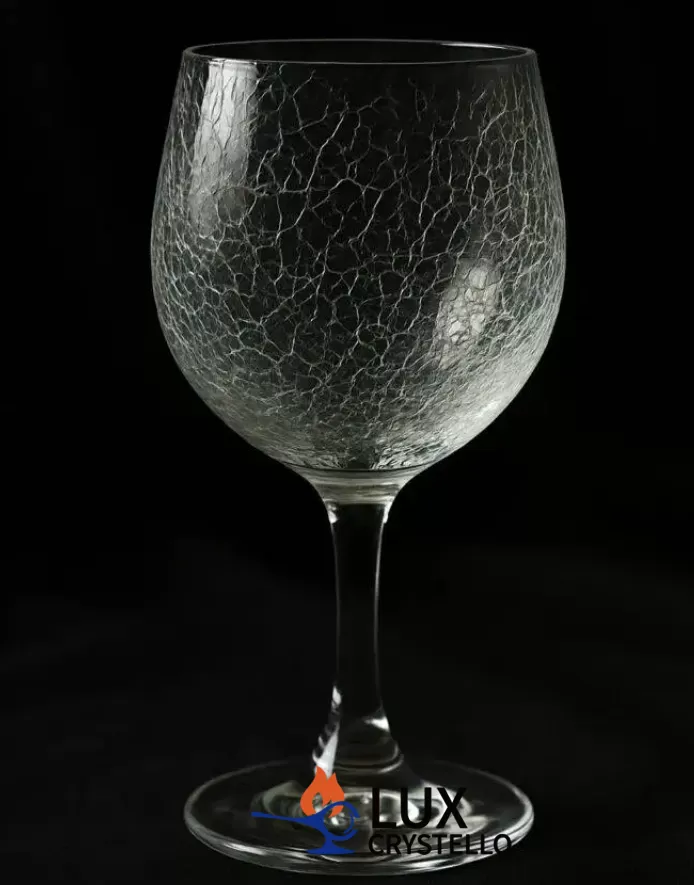
In the 20th century, crackle glass history entered a renewed phase as both artisanal studios and industrial manufacturers adopted the craft. Hand-blown goblets and vases with unique crack networks carried forward the same allure once held by Song ceramics: no two pieces are ever identical.
The fascination lies in controlled imperfection. Designers embraced the notion that a seemingly fractured surface could still embody harmony and strength. Modern interior movements like wabi-sabi and Japandi further amplified demand, as they celebrate irregularity, texture, and authenticity. This demonstrates how the origin of ice crack craftsmanship continues to inspire design centuries later.
A Global Artistic Conversation
What began as an unintended glaze phenomenon in Chinese kilns evolved into a consciously cultivated effect across cultures. By the mid-20th century, European and American studios were producing “crackle glass” tableware and décor, while Asian artisans continued to reinterpret the technique in both ceramics and crystal.
Today, this East-West dialogue remains evident: the origin of ice crack craftsmanship is honored in porcelain, while its reinterpretation in glass is celebrated as a fusion of heritage and innovation. Both ice crack glaze and crackle glass techniques have become enduring symbols of cultural exchange and artistic evolution.
Conclusion: Imperfection Perfected
The narrative of the origin of ice crack craftsmanship is a testament to how imperfections can mature into lasting traditions. What began as accidental cracks in Song Dynasty porcelain glaze became a philosophical emblem of resilience and beauty. Over centuries, the same principle was reimagined by glass artisans who translated the aesthetic into a new medium through thermal and surface techniques.
From porcelain bowls admired by ancient scholars to modern crystal goblets and decorative panels, crackle glass history illustrates how craft evolves while remaining faithful to its core essence. The crackle glass technique endures because it embodies a universal paradox: fragility that resists breaking, flaw that becomes design, and accident transformed into enduring art.
The true origin of ice crack craftsmanship thus lies not solely in technical processes, but in human perception—the enduring capacity to discover profound beauty where others might see only flaw.
Inspired by the artistry of texture? Collaborate with Luxcrystello Crystal to explore contemporary interpretations of the crackle glass technique and ice crack glaze for your exclusive design projects.
Contact Luxcrystello Crystal for Bespoke Textured Glass