



How to Make Glass Tableware: 6 Proven Techniques from Blowing to Casting
Discover the fascinating processes behind how to make glass tableware through six distinct manufacturing methods that transform molten silica into functional art, balancing traditional craftsmanship with modern production efficiency.
Quick Guide: Glass Tableware Manufacturing Methods
What are the main techniques for making glass tableware?
Glassblowing, glass pressing, centrifugal casting, kiln forming, glass casting, and thermoforming represent the primary production methods.
Which method is best for mass production?
Glass pressing offers the highest efficiency for large quantities with consistent quality and detailed patterns.
What technique provides the most artistic freedom?
Glassblowing allows maximum creative expression with organic shapes and unique characteristics in each piece.
How long does it typically take to make glass tableware?
Production times range from minutes for pressed items to days for complex cast pieces requiring extended annealing.
What’s the difference between blown and pressed glass?
Blown glass features thinner walls and organic shapes, while pressed glass is thicker with precise molded details.
Understanding how to make glass tableware reveals the fascinating intersection of functional design and artistic expression that characterizes quality glassware production. The journey from raw materials to finished tableware involves multiple specialized techniques, each offering distinct advantages for creating everything from everyday drinkware to exquisite artisanal pieces that grace the world’s finest tables.
Techniques That Show How to Make Glass Tableware That Balances Art and Practicality
Glassblowing: The Ancient Art of Breath and Fire
Glassblowing represents the oldest and most artistic approach to understanding how to make glass tableware. This traditional method begins with gathering molten glass onto the end of a blowpipe, where skilled artisans inflate the material through controlled breathing while simultaneously shaping it with specialized hand tools, gravity, and precise movements. The glassblowing process enables the creation of fluid curves and organic designs that characterize high-end tableware collections.
Master Liu, a craftsman with three decades of glassblowing experience, explains the unique quality of this method: “When you blow a bowl by hand, you can feel the soul of the fire inside it. That’s what industrial manufacturing can never replicate—the human connection between breath, fire, and form.”
Blown glass tableware—including plates, bowls, and drinking vessels—often exhibits distinctive characteristics like tiny air bubbles and subtle asymmetries that testify to its handmade origins and artistic authenticity. While this method demands exceptional skill and produces unique variations between pieces, it remains unparalleled for creating tableware with distinctive character and artistic value.
Glass Pressing: Efficiency Meets Precision
Glass pressing, alternatively known as mold pressing, offers a more efficient manufacturing solution, particularly suited for mass production requirements. This method involves dropping precisely measured amounts of molten glass into pre-formed molds, then using a mechanical plunger to press the material into the desired shape. The pressing technique proves ideal for creating uniform pieces with intricate surface patterns, embossed designs, or branded logos.
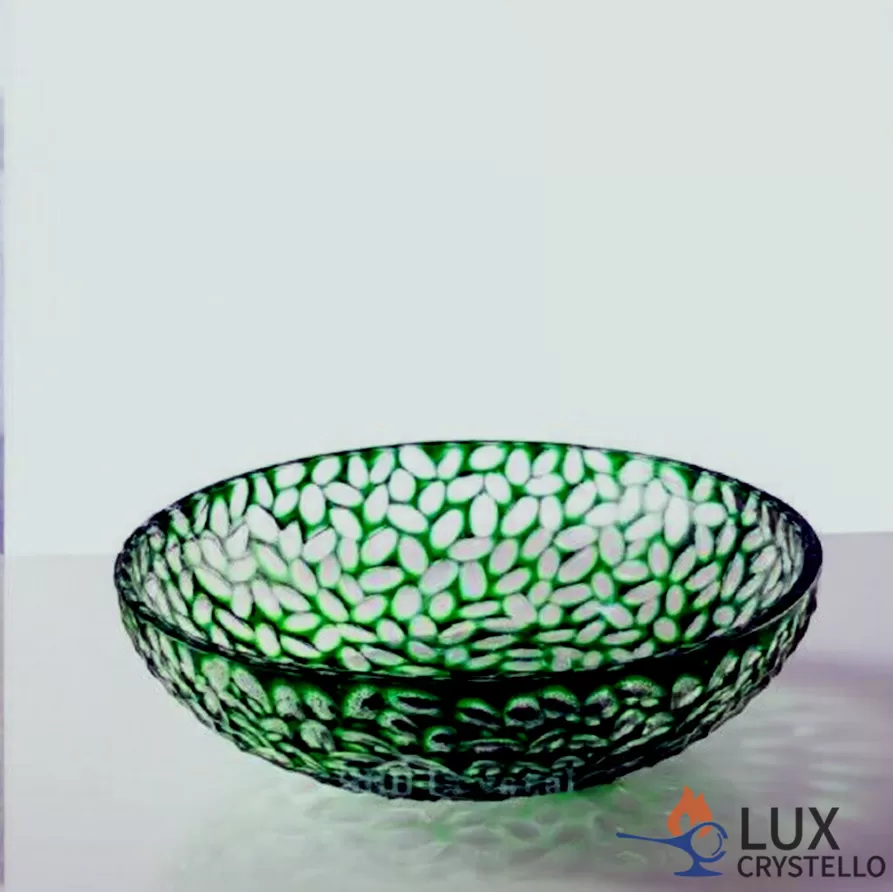
Pressed glass tableware typically features thicker walls and sturdier construction compared to blown alternatives, making it particularly suitable for commercial applications in hotels, restaurants, and affordable home collections where durability and consistency outweigh artistic uniqueness. The efficiency of this method allows for high-volume production while maintaining quality standards, though it offers less creative flexibility than hand-blown techniques.
Centrifugal Casting: Symmetry Through Motion
Also referred to as spin casting, centrifugal casting utilizes rotational force to distribute molten glass evenly within spinning molds. This method excels at producing round, symmetrical pieces like serving trays and shallow bowls with exceptional geometric precision. The centrifugal force actively pushes the glass against the mold walls, creating smooth, even thickness while significantly minimizing the formation of internal air bubbles or imperfections.
Use rate: Moderate
Difficulty: Medium
Finish: Clean lines with minimal texture variation
Advantage: Excellent for large-sized pieces with consistent wall thickness
While centrifugal casting requires specialized equipment and is predominantly suited for high-volume production of relatively simple shapes, it delivers outstanding consistency and efficiency for manufacturers prioritizing geometric precision and production speed.
Kiln Forming: The Oven-Based Approach
Kiln forming encompasses two related techniques—glass fusing and glass slumping—that transform flat glass sheets into three-dimensional tableware through controlled heating processes. In fusing, multiple glass layers bond together under high temperatures, while slumping involves heating glass until it softens and conforms to mold contours through gravity.
Use rate: High in studio glassmaking environments
Difficulty: Low to medium technical requirements
Finish: Typically decorative with artistic emphasis
Advantage: Exceptional versatility for pattern work and custom designs
This method enjoys particular popularity among studio glass artists and custom tableware producers creating distinctive platters, cheese boards, and decorative serving dishes. While kiln forming offers tremendous creative potential through color layering and pattern development, it faces limitations in producing complex three-dimensional forms compared to other techniques.
Glass Casting: Sculptural Possibilities
The glass casting method involves pouring molten glass into refractory molds where it cools gradually under precisely controlled conditions. This approach enables the creation of thick, substantial pieces with pronounced sculptural qualities—ideal for statement bowls, centerpiece plates, and artistic tableware that prioritizes visual impact over lightweight functionality.
Use rate: Niche applications and art glass production
Difficulty: High technical requirements and skill level
Finish: Heavyweight construction with tactile presence
Advantage: Maximum design freedom for unique artistic expressions
Glass casting demands extended cooling periods (often involving sophisticated annealing cycles) and meticulous mold preparation, making it predominantly suitable for artistic, low-volume production where labor intensity and time requirements are secondary to achieving specific aesthetic outcomes.
Thermoforming: Modernist Efficiency
Though more commonly associated with architectural glass applications, thermoforming (or hot bending) occasionally serves specialized tableware production needs. This technique involves heating glass sheets until pliable, then bending them over metal forms to create serving trays, glass domes, or minimalist dishware with clean, geometric aesthetics.
Use rate: Limited to specific tableware applications
Difficulty: Medium technical complexity
Finish: Characteristically smooth with precise angles
Advantage: Production efficiency for flat and angular designs
Thermoforming excels at creating tableware with sleek, contemporary aesthetics but cannot replicate the depth, complexity, or organic qualities achievable through blown or cast glass techniques. Its application remains most appropriate for manufacturers prioritizing modern design language and production efficiency.
Which Method is Best for You?
Understanding how to make glass tableware through these six distinct techniques reveals how manufacturing choices directly influence both aesthetic outcomes and functional performance. Each method contributes uniquely to the diverse world of glass tableware, offering specific advantages aligned with different production priorities, design philosophies, and market requirements.
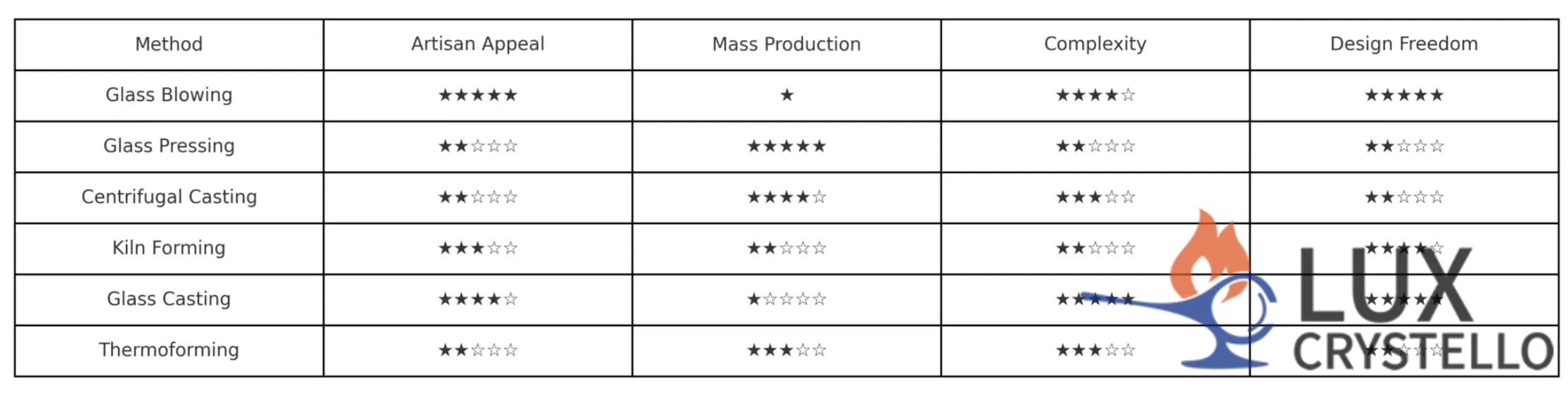
For manufacturers and designers, selecting the appropriate technique involves balancing multiple considerations:
- Production Volume: High-volume needs favor pressing or centrifugal casting
- Artistic Requirements: Unique pieces benefit from blowing or casting methods
- Budget Constraints: Pressing and thermoforming offer cost efficiencies
- Design Complexity: Casting and blowing enable sophisticated three-dimensional forms
- Market Positioning: Handmade techniques support luxury positioning while pressed glass serves mass markets
Frequently Asked Questions
What type of glass is typically used for tableware?
Most glass tableware utilizes soda-lime glass for everyday items or borosilicate glass for heat-resistant applications, with lead crystal reserved for premium decorative pieces.
Can these techniques be combined in single pieces?
Yes, hybrid approaches are common—for example, blown elements might be combined with pressed bases, or cast pieces might undergo additional cold working for refined details.
How does the choice of technique affect the final product price?
Hand-blown and cast pieces command premium prices due to labor intensity, while pressed and centrifugally cast items offer more accessible price points through production efficiencies.
What safety considerations are important in glass tableware manufacturing?
Proper annealing is crucial to relieve internal stresses, while compositional safety (particularly lead content) must be considered for items contacting food and beverages.
Conclusion: The Art and Science of Tableware Creation
Learning how to make glass tableware reveals the sophisticated balance between artistic tradition and manufacturing science that defines quality glassware production. From the ancient breath-powered magic of glassblowing to the precision engineering of modern pressing techniques, each method brings unique capabilities to the creation of functional objects that also serve as aesthetic statements.
The continued evolution of these manufacturing processes ensures that glass tableware remains both an accessible everyday utility and a medium for extraordinary artistic expression, with techniques continuously refined to meet changing consumer expectations and design possibilities.
Explore Glass Tableware Manufacturing with Luxcrystello
Discover the craftsmanship behind exceptional tableware through Luxcrystello‘s diverse manufacturing capabilities. Whether you seek the unique character of hand-blown pieces or the consistent quality of pressed glass collections, our expertise spans the full spectrum of techniques for creating beautiful, functional tableware.
Contact our production specialists to discuss which manufacturing method best aligns with your tableware vision, budget, and market requirements.